Padrões espaciais de diversidade da Família Emberizidae (Aves: Passeriformes) e seleção de áreas prioritárias para conservação no Cerrado
DOI:
https://doi.org/10.35699/2675-5327.2007.23189Palavras-chave:
Emberizidae, Cerrado, conservation, priority areas, complementarity, irreplaceabilityResumo
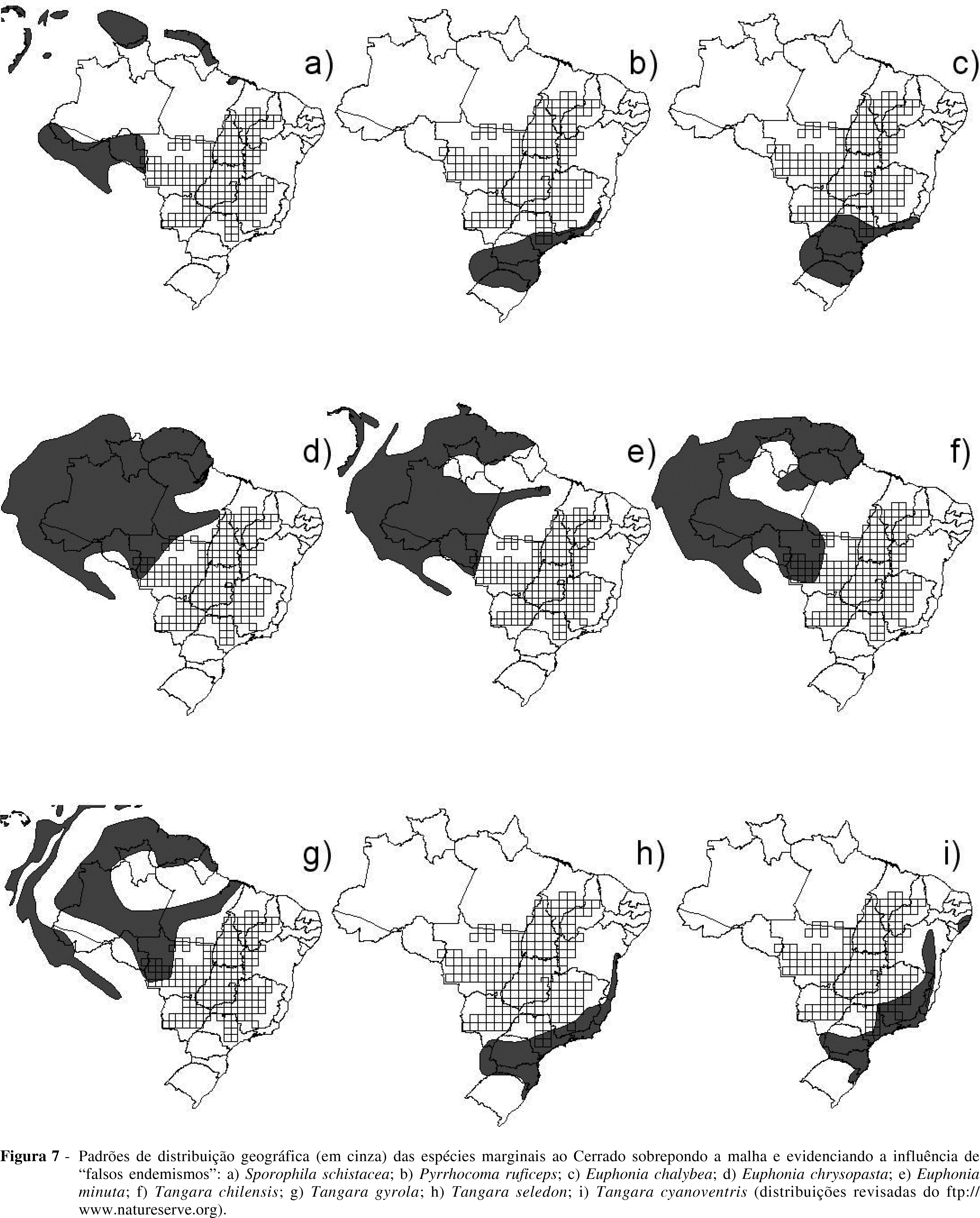
The aim of this work was to design priority areas for conservation in the Cerrado region, Brazil, based on Emberizidae (Aves) diversity. We analyzed the overlap of complementarity networks of areas in the biome needed to represent all the species of the group (irreplaceability), as well as an optimal minimum area network that minimizes socioeconomic cost throughout the region. To identify any possible influence of the species that had a small dimension of occurrence in Cerrado and concern others ecoregions (i.e., that do not have high proportion of ranges within the Cerrado), we performed all the analyses with the total number of species breeding in the Cerrado and also excluding those that are marginally distributed in the biome. The minimum number of the areas selected to build the networks decayed from 6 to 5 cells, when the peripheral ones were excluded. Our results showed that endemic and peripheral species influenced the priorities areas for conservation, we concluded that, although Mato Grosso and W Bahia cells were important to conservation, they lack conservation units.
Downloads
Publicado
Edição
Seção
Licença

Este trabalho está licenciado sob uma licença Creative Commons Attribution-NonCommercial 4.0 International License.
