Quem é realocado?
Perfis sociodemográficos e políticas de realocação planejada em áreas de risco de Belo Horizonte
DOI:
https://doi.org/10.35699/2237-549X.2026.59480Palavras-chave:
Realocação Planejada, Desastres, Mudanças Climáticas, Belo HorizonteResumo
A urbanização brasileira expôs parte da população à moradia em áreas de risco socioambiental. Nesse contexto, políticas públicas de realocação planejada surgem como instrumentos de enfrentamento aos riscos de desastres, embora nem sempre considerem a complexidade sociodemográfica das populações afetadas. Em Belo Horizonte, a política de realocação municipal visa reduzir riscos de deslizamentos, acidentes e mortes entre famílias em situação de vulnerabilidade socioeconômica e ambiental. O objetivo deste artigo é identificar os perfis selecionados para realocação planejada por meio da política municipal no contexto de risco ambiental do município, no que diz respeito às diferenças entre os domicílios que foram realocados e os que permaneceram em áreas expostas a riscos. Para tanto, serão investigadas as diferenças nas características sociodemográficas entre domicílios realocados e não realocados em áreas de risco, a partir de dados fornecidos pela Prefeitura do município referentes ao período de 2010 a 2019.A metodologia baseou-se em técnicas de análise de cluster para identificar perfis domiciliares. Os resultados indicam que a presença de filhos é recorrente entre os realocados, sugerindo maior aversão ao risco em domicílios com crianças. Observou-se a concentração de realocações em fases iniciais do ciclo de vida familiar, enquanto perfis como idosos ou famílias extensas permanecem expostos a riscos por não serem realocados.
Referências
BARBIERI, A. F.; BILSBORROW, R. E.; PAN, W. K. Farm household lifecycles and land use in the ecuadorian Amazon. Population and Environment, v. 27, n. 1, p. 1-27, Sep. 2006.
BARBIERI, A. F.. Cities and the Demo-Climatic Transition in Brazil. Sociedade & natureza (ufu. Online). v.36, p.1 - 12, 2024.
BARBIERI, A. F., VIANA, R. de M., SOARES, V. C. de O., SCHNEIDER, R. A. Contribuições teóricas para uma demografia dos desastres no Brasil. Revista Brasileira de Estudos de População, v. 39, p. e0227, 2022.
BARNETT, J; McMICHAEL, C. The effects of climate change on the geography and timing of human mobility. Population and environment, 39 (4), pp.339-356, 2018. https://doi.org/10.1007/s11111-018-0295-5.
BLACK, R.; ADGER, W. N.; ARNELL, N. W.; DERCON, S.; GEDDES, A.; THOMAS, D. The effect of environmental change on human migration. Global Environmental Change, v. 21, supl. 1, p. S3–S11, 2011.
DOI: 10.1016/j.gloenvcha.2011.10.001. Disponível em: https://www.sciencedirect.com/science/article/abs/pii/S0959378011001531. Acesso em: 31 jan. 2026
BLACK, R.; ARNELL, N. W.; ADGER, W. N.; THOMAS, D.; GEDDES, A.
Migration, immobility and displacement outcomes following extreme events. Environmental Science & Policy, v. 27, p. S32–S43, 2013.
DOI: https://doi.org/10.1016/j.envsci.2012.10.001. Disponível em: https://www.sciencedirect.com/science/article/pii/S1462901112001475. Acesso em: 31 jan. 2026
BOTYAROV, M.; MILLER, E. Partitioning around medoids as a systematic approach to generative design solution space reduction. Results in Engineering. 2022 . 15. 100544. 10.1016/j.rineng.2022.100544.
BOWER, E.R., BADAMIKAR, A., WONG-PARODI, G., FIELD, C.B. Enabling pathways for sustainable livelihoods in planned relocation. Nat. Clim. Chang. 13, 919–926 (2023). https://doi.org/10.1038/s41558-023-01753-x
CERDA, P.; VAROQUAUX, G.; KÉGL, B.
Similarity encoding for learning with dirty categorical variables. Machine Learning, v. 107, n. 8-10, p. 1477-1494, 2018.
DOI: https://doi.org/10.1007/s10994-018-5724-2. Disponível em: https://link.springer.com/article/10.1007/s10994-018-5724-2. Acesso em: 31 jan. 2026
COSTA, H.S.M.; MONTE-MÓR, R.L. Urbanization and environment: trends and patterns in contemporary Brazil. In: CNPD/ABEP/NEPO. Population and environment in Brazil Campinas, Brasil, 2002.
CUNDILL, G.; SINGH, C.; ADGER, W. N.; SAFRA DE CAMPOS, R.; VINCENT, K.; TEBBOTH, M.; MAHARJAN, A.
Toward a climate mobilities research agenda: intersectionality, immobility, and policy responses. Global Environmental Change: Human and Policy Dimensions, v. 69, p. 102315, 2021. DOI: https://doi.org/10.1016/j.gloenvcha.2021.102315. Disponível em: https://www.sciencedirect.com/science/article/pii/S0959378021000947. Acesso em: 31 jan. 2026
CUTTER, S. L. Vulnerability to environmental hazards. Progress in Human Geography, 20(4), 529–539, 1996. https://doi.org/10.1177/030913259602000407
FERRIS, E. Planned relocation, disasters and climate change: Consolidating good practices and preparing for the future. UNHCR, Brookings and Georgetown University, 2014. Disponível em: https://www.unhcr.org/53c4d6f99.pdf Acesso em: 02 de novembro de 2024.
FUCHS, R; DEMKO, G. Rethinking population distribution policies. Population Research and Policy Review. 2. 161-187, 1983, 10.1007/BF00141251.
GUEDES, G. R., QUEIROZ, B. L., BARBIERI, A. F., & VANWEY, L. K.Ciclo de vida domiciliar, ciclo do lote e mudança no uso da terra na Amazônia Brasileira: contribuições da literatura. Revista Brasileira de Estudos de População, v. 28, n. 1, p. 231-240, 2011.
IBGE. Censo Demográfico do Brasil de 2010. Rio de Janeiro: IBGE, 2010.
IBGE, Coordenação de Geografia. População em áreas de risco no Brasil. Rio de Janeiro: IBGE, 2018. 91 p.: il. Disponível em: https://www.ibge.gov.br/geociencias/informacoes-ambientais/estudos-ambientais/21538-populacao-em-areas-de-risco-no-brasil.html?=&t=acesso-ao-produto. Acesso em: 31 jan. 2026
IBGE. Censo Demográfico do Brasil de 2022. Rio de Janeiro: IBGE, 2022.
KASSAMBARA, A. Practical Guide to Cluster Analysis in R: Unsupervised Machine Learning. [s.l.] STHDA, 187 p., 2017.
LIBÂNIO, C. A. O fim das favelas? Planejamento, participação e remoção de famílias em Belo Horizonte. Cadernos Metrópole, v. 18, p. 765-784, 2016.
LOPEZ-AREVALO, I.; ALDANA-BOBADILLA, E.; MOLINA-VILLEGAS, A.; GALEANA-ZAPIÉN, H.; MUÑIZ-SANCHEZ, V.; GAUSIN-VALLE, S.
A memory-efficient encoding method for processing mixed-type data on machine learning. Entropy, Basel, v. 22, n. 12, p. 1391, 9 dez. 2020.
DOI: https://doi.org/10.3390/e22121391. Disponível em: https://www.mdpi.com/1099-4300/22/12/1391. Acesso em: 31 jan. 2026
McADAM, J; FERRIS, E. Planned Relocations in the Context of Climate Change: Unpacking the Legal and Conceptual Issues. Cambridge Journal of International and Comparative Law. 4. 137>-166. 10.7574/cjicl.04.01.137, 2015.
McMICHAEL, C. Human mobility, climate change, and health: unpacking the connections. Lancet Planetary Health, 4 (6) pp. e217-e218, 10.1016/S2542-5196(20)30125-X, 2020.
MOREIRA, R. E A. Vulnerabilidades e Heterogeneidades Populacionais em um Contexto de Realocação Planejada em Belo Horizonte. Tese (Doutorado) - Universidade Federal de Minas Gerais, Centro de Desenvolvimento e Planejamento Regional, Belo Horizonte, 2023.
MOREIRA, R. E. A. Deslocamentos induzidos por desastres relacionados à chuva no Brasil entre 2013 e 2022. REMHU, Revista Interdisciplinar da Mobilidade Humana, [S. l.], v. 32, p. e321876, 2024. DOI: 10.1590/1980-858525038800032206. Disponível em: https://remhu.csem.org.br/index.php/remhu/article/view/1876. Acesso em: 27 abr. 2025.
NUNES, A. DE A.; PINTO, E. J. DE A.; BAPTISTA, M. B.. Detection of trends for extreme events of precipitation in the Metropolitan Region of Belo Horizonte through statistical methods. RBRH, v. 23, p. e9, 2018.
NUNES, A. DE A., PINTO, E. J. DE A., BAPTISTA, M. B., PAULA, M. H. DE ., XAVIER, M. O.Intensity-duration-frequency curves in the municipality of Belo Horizonte from the perspective of non-stationarity. RBRH, v. 26, p. e29, 2021.
OLIVER-SMITH, A. Involuntary Resettlement, Resistance and Political Empowerment. Journal of Refugee Studies, Volume 4, Issue 2, 1991, Pages 132–149, https://doi.org/10.1093/jrs/4.2.132
OLIVER-SMITH, A. The choice of perils: understanding resistance to resettlement for urban disaster risk reduction and climate change adaptation. In C. Johnson, G. Jain, & A. Lavell (Eds.), Rethinking Urban Risk and Resettlement in the Global South (pp. 133–153). UCL Press, 2021. https://doi.org/10.2307/j.ctv1ctgr0k.16
PALAGI, S.,JAVERNICK-WILL, A. Pathways to Livable Relocation Settlements Following Disaster. Sustainability, 12(8), 3474. 2020. https://doi.org/10.3390/su12083474
PARIZZI, M. G.; SEBASTIÃO, C. S.; VIANA, C. S.; PFLUEGER, M. C.; CAMPOS, L. C.; CAJAZEIRO, J. M. D.; TOMICH, R. S.; GUIMARÃES, R. N.; ABREU, M. L.; SOBREIRA, F. G.; REIS, R. J. Correlações entre chuvas e movimentos de massa no município de Belo Horizonte, MG. Revista Geografias, [S. l.], v. 6, n. 2, p. 49–68, 2010. DOI: 10.35699/2237-549X.13296. Disponível em: https://periodicos.ufmg.br/index.php/geografias/article/view/13296. Acesso em: 31 jan. 2026.
PBH - PREFEITURA DE BELO HORIZONTE. Diagnóstico da Situação de Risco Geológico das Vilas, Favelas e Conjuntos Habitacionais de Belo Horizonte 2015/2016. 2016. Disponível em: https://prefeitura.pbh.gov.br/sites/default/files/estrutura-de-governo/urbel/diagnostico-2015-16.pdf. Acesso em: novembro de 2024
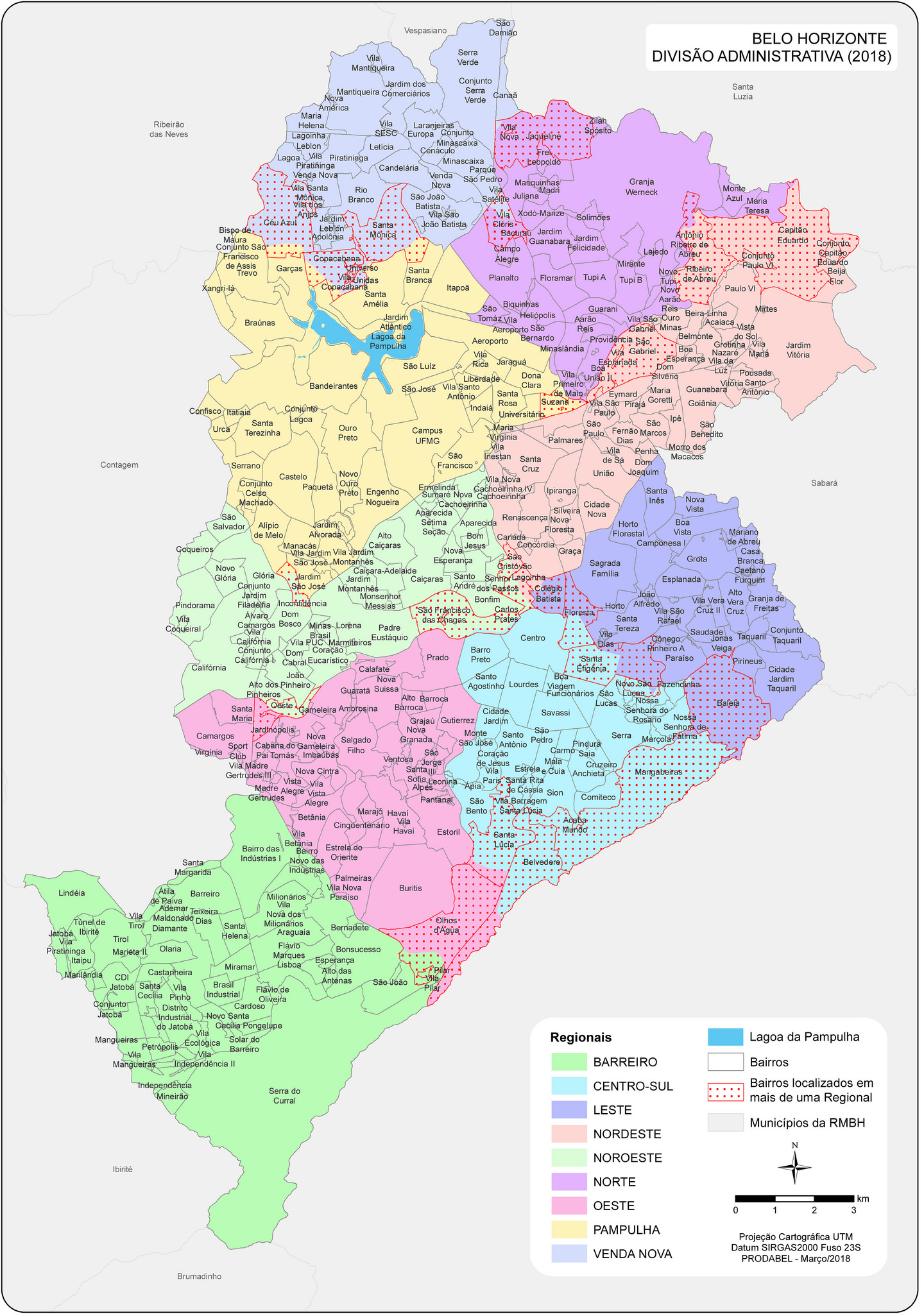
PREFEITURA MUNICIPAL DE BELO HORIZONTE. Belo Horizonte: divisão administrativa. Projeção cartográfica UTM, datum SIRGAS 2000, fuso 23S. Belo Horizonte: PRODABEL, mar. 2018. Disponível em: https://upload.wikimedia.org/wikipedia/commons/c/c7/Belo_Horizonte_-_Divis%C3%A3o_administrativa_%282018%29.jpg. Acesso em: 10 fev 2026.
PBH - PREFEITURA DE BELO HORIZONTE. PEAR – Áreas de Risco. 2020a. Disponível em: https://prefeitura.pbh.gov.br/urbel/pear-areas-de-risco. Acesso em: dezembro de 2020.
PBH - PREFEITURA DE BELO HORIZONTE. PGE – Plano Geral Específico. 2020b. Disponível em: https://prefeitura.pbh.gov.br/urbel/pge-planejamento. Acesso em: dezembro de 2020.
PELLING, M. The Vulnerability of Cities: Natural Disasters and Social Resilience. London: Earthscan Publications Ltd, 2003.
PERZ, S. G. Household demographic factors as life cycle determinants of land use in the Amazon. Population Research and Policy Review, Amsterdam, v. 20, n. 3, p. 159-186, Jun. 2001.
REED, H; LUDWIG, B; BRASLOW, L. Forced Migration. In: White, M. (ed). International Handbook of Migration and Population Distribution. Netherlands: Springer, 2016. p. 605 – 625.
ROLNIK, R. Territorial exclusion and violence: the case of the state of São Paulo, Brazil. Geoforum, 32(4), 471–482. doi:10.1016/s0016-7185(01)00017-3, 2001.
SANTOS, R. O. Transições do curso de vida e padrão etário da migração interna no Brasil: o que os dados de período podem nos contar? Tese (Doutorado) - Universidade Federal de Minas Gerais, Centro de Desenvolvimento e Planejamento Regional, Belo Horizonte, 2019.
SANTOS, R. O.; BARBIERI, A. F.; AMARAL, E. F. L. Transiciones del curso de vida y migración interna en el Brasil: un análisis basado en datos de múltiples períodos. Notas de Población, v. 50, p. 105-135, 2023. Disponível em https://repositorio.cepal.org/server/api/core/bitstreams/5d9de634-1b62-470c-91e3-7c6f0b11404f/content
SENEVIRATNE, S. I.; ZHANG, X.; ADNAN, M.; BADI, W.; DERECZYNSKI, C.; DI LUCA, A.; GHOSH, S.; ISKANDAR, I.; KOSSIN, J.; LEWIS, S.; OTTO, F.; PINTO, I.; SATOH, M.; VICENTE-SERRANO, S. M.; WEHNER, M.; ZHOU, B. Weather and climate extreme events in a changing climate. In: MASSON-DELMOTTE, V.; ZHAI, P.; PIRANI, A.; CONNORS, S. L.; PÉAN, C.; BERGER, S.; CAUD, N.; CHEN, Y.; GOLDFARB, L.; GOMIS, M. I.; HUANG, M.; LEITZELL, K.; LONNOY, E.; MATTHEWS, J. B. R.; MAYCOCK, T. K.; WATERFIELD, T.; YELEKÇI, O.; YU, R.; ZHOU, B. (ed.). Climate change 2021: the physical science basis: contribution of Working Group I to the Sixth Assessment Report of the Intergovernmental Panel on Climate Change. Cambridge: Cambridge University Press, 2021. p. 1513–1766. DOI: https://doi.org/10.1017/9781009157896.013.
SILVEIRA, D., CARMO, R.F., LUZ, Z.M.P. . O planejamento de quatro áreas do Programa Vila Viva na cidade de Belo Horizonte, Brasil: uma análise documental. Ciência & Saúde Coletiva. 24. 1165-1174. 10.1590/1413-81232018243.10942017, 2016.
SOUZA, M. Mudar a cidade: uma introdução crítica ao planejamento e à gestão urbanos. Rio de Janeiro: Bertrand Brasil, 2006.
UMBELINO, G. Simulações de distribuição espacial domiciliar e projeções demográficas intraurbanas com apoio de geotecnologias. 193f. Tese (Doutorado em Demografia) – Cedeplar, Universidade Federal de Minas Gerais, Belo Horizonte, 2012.
VALENCIO, N., SIENA, M., MARCHEZINI, V., GONÇALVES J. (org.). Sociologia dos desastres: construção, interfaces e perspectivas no Brasil. São Carlos: RiMA Ed., 2009. 280p. Disponível em https://defesacivil.es.gov.br/Media/DefesaCivil/Publicacoes/Outros/Livro-Sociologia-Dos-Desastres.pdf Acesso em: 31 jan 2026
VIANA, R. M. A remoção dos desastres e os desastres da remoção: risco, vulnerabilidade e deslocamento forçado em Belo Horizonte. Tese de Doutorado. Belo Horizonte: Cedeplar/UFMG, 2015.
WAYCARBON. Vulnerability Assessment to Climate Change in the Municipality of Belo Horizonte - Brazil. Summary for Policymakers, 2016. Disponível em: https://www.kas.de/c/document_library/get_file?uuid=72519c05-3b85-57a7-d97f-49e02ebcfaa3&groupId=252038 Acesso em: dezembro de 2024.
WISNER, B; BLAIKIE, P; CANNON, T; DAVIS, I. At Risk: Natural Hazards, People’s Vulnerability and Disasters (2nd edn). Routledge: New York, 2004.
Downloads
Publicado
Edição
Seção
Licença
Copyright (c) 2026 Dr. Richard de Assis Moreira, Dr. Alisson Barbieri, Dr. Reinaldo Santos

Este trabalho está licenciado sob uma licença Creative Commons Attribution 4.0 International License.
Os artigos desta revista obedecem a licença Creative Commons — Attribution 4.0 International — CC BY 4.0