O corpo no teatro
DOI:
https://doi.org/10.17851/2317-2096.7..279-285Palavras-chave:
corpo, semiótica, teatro, body, semiosis, theater.Resumo
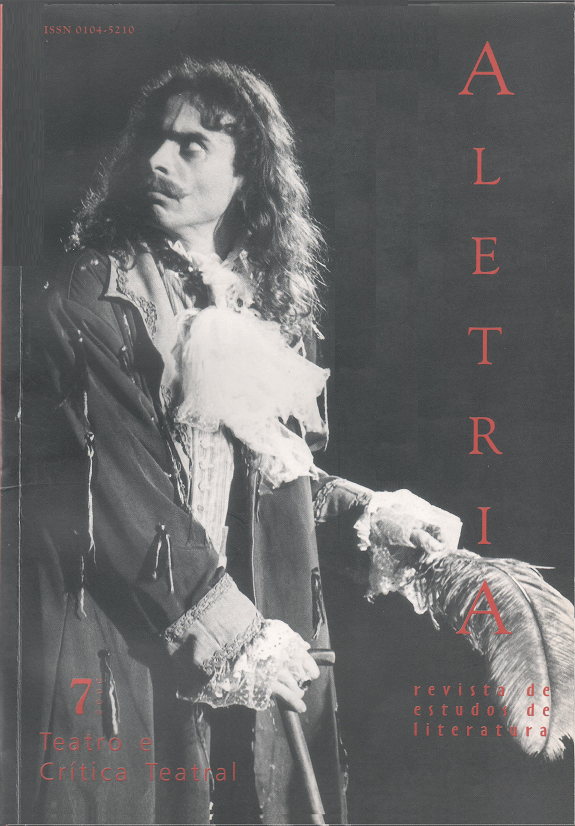
Resumo: O teatro exige a presença de corpos. É necessário, no entanto, repensar a concepção de que o corpo, numa encenação, subordina-se à imagem, ou seja, a seu caráter explícito de representação; é necessário levar em conta que o contato de corpos no espaço cena-platéia não visa apenas a veicular uma convenção ficcional: há, no teatro, um excesso de corpo que transvaza da ficção. A relação entre ator e personagem é necessária – o teatro só existe através de um pacto ficcional –, mas não é suficiente – a significação do corpo do ator não se esgota no fato de ser personagem. Como pensar, então, as relações entre as camadas de signos que agem no espaço teatral? Como se dá a semiose que torna possível uma ficção gerada pelo contato de corpos?
Palavras-chave: corpo; semiótica; teatro.
Abstract: Theater requires the presence of bodies. However, it’s necessary to check the conception that body, in staging, is subordinated to image, to its explicit feature of representation; it’s necessary to take into account that the contact of bodies in stage-audience space doesn’t just intend to transmit a fictional convention: in theater, there is an excess cífbody that draws off fiction. The relationship between actor and character is necessary – theater only exists through a fictional pact –, but it's not sufficient the meaning of the actor’s body is not limited to its being character. How to think the relationships between the layers of signs that actuate in theatrical space? How is the semiosis that makes a fiction created by the contact of bodies possible?
Keywords: body; semiosis; theater.
Downloads
Referências
ARTAUD, Antonin. O teatro e seu duplo. Trad. Teixeira Coelho. São Paulo: Max Limonad, 1984.
BARTHES, Roland. Roland Barthes por Roland Barthes. Trad. Leyla Perrone-Moisés. São Paulo: Cultrix, 1987.
BERGSON, Henri. Matéria e memória. Trad. Paulo Neves da Silva. São Paulo: Martins Fontes, 1990.
ECO, Umberto. Parâmetros da semiologia teatral. In: HELBO, André (org.). Semiologia da representação. São Paulo: Cultrix, 1980.
MERLEAU-PONTY, Maurice. O olho e o espírito. In: ______. Textos selecionados. Trad. Marilena Chauí. São Paulo: Abril Cultural, 1980. Coleção Os Pensadores.
PEIRCE, Charles Sanders. Semiótica. Trad. Teixeira Coelho. São Paulo: Perspectiva, 1987.
PLAZA, Julie. Tradução intersemiótica. São Paulo: Perspectiva, 1987.
Downloads
Publicado
Edição
Seção
Licença
Copyright (c) 2000 Luis Alberto Brandão Santos (Autor)

Este trabalho está licenciado sob uma licença Creative Commons Attribution 4.0 International License.
Autores que publicam nesta revista concordam com os seguintes termos:Autores mantém os direitos autorais e concedem à revista o direito de primeira publicação, com o trabalho simultaneamente licenciado sob a Licença Creative Commons Attribution que permite o compartilhamento do trabalho com reconhecimento da autoria e publicação inicial nesta revista.Autores têm autorização para assumir contratos adicionais separadamente, para distribuição não-exclusiva da versão do trabalho publicada nesta revista (ex.: publicar em repositório institucional ou como capítulo de livro), com reconhecimento de autoria e publicação inicial nesta revista.Autores têm permissão e são estimulados a publicar e distribuir seu trabalho online (ex.: em repositórios institucionais ou na sua página pessoal) a qualquer ponto antes ou durante o processo editorial, já que isso pode gerar alterações produtivas, bem como aumentar o impacto e a citação do trabalho publicado (Veja The Effect of Open Access).
Como Citar