Displaced objects and postmemory in Michel Valensi’s L’empreinte
DOI:
https://doi.org/10.35699/1982-3053.2026.64460Keywords:
displaced objects; post-memory; exodus; exile; Jewish literature.Abstract
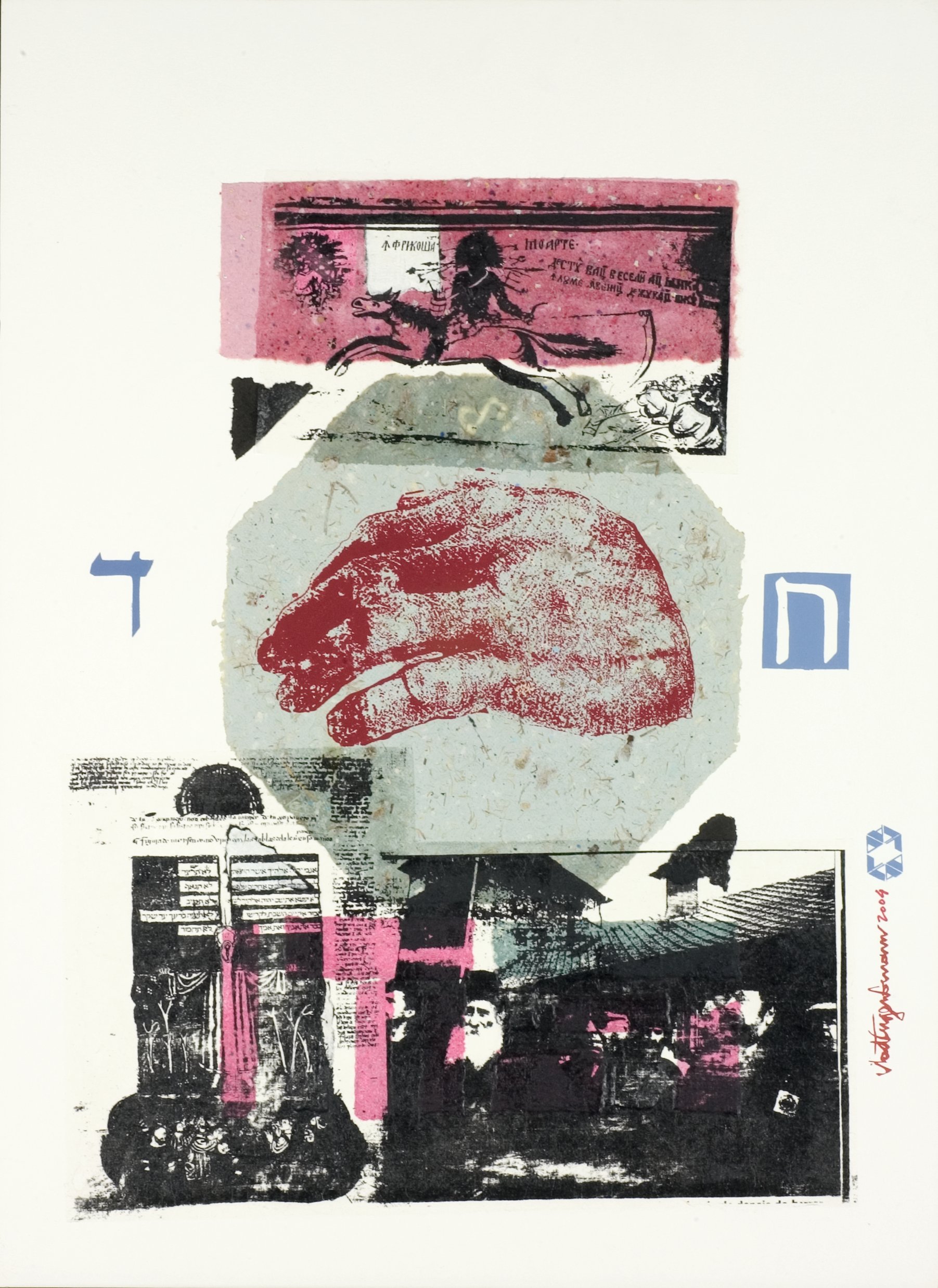
L’empreinte, by Michel Valensi, is a unique novel about the memory of Tunisian Jews exiled in France. Written when the author, himself from a family of exiles who left his hometown at the age of six, was 20 years old, it was originally published by a small Tunis publisher in 1983 but received virtually no attention from critics or the publishing market. Reissued in Paris in 2021, the book attempts, in the author's words, to narrate "what life was made of for the Jews of Tunis". Displaced objects and the author's own post-memory are the raw material for an evocative and nostalgic writing that simultaneously constellates the echoes of a vanished world and acknowledges the inevitable and irreversible nature of its disappearance. Using poorly printed photographs long before an author like W. G. Sebald popularized the use of this narrative device, as well as descriptions of so-called kchouchs—small, useless objects that are signs of interrupted existences—Valensi created an avant-garde novel that occupies a prominent place in Jewish literature of emigration from the Arab world.
Downloads
References
ASSMANN, Aleida. Erinnerungsräume: Formen und Wandlungen des kulturellen Gedächtnisses. Munique: C. H. Beck, 2018.
HIRSCH, Marianne; SPIZER, Leo. Ghosts of Home: The afterlife of Czernowitz in Jewish Memory. Berkeley: University of California Press, 2009.
RADIO FRANCE CULTURE. Entrevista com Michel Valensi. Disponível em: https://www.radiofrance.fr/franceculture/podcasts/talmudiques/une-memoire-tunisienne-6052997. Acesso em: 02/04/2026.
VALENSI, Michel. L’empreinte. Paris: L’éclat, 2021.
Downloads
Published
Issue
Section
License
Copyright (c) 2026 Arquivo Maaravi: Revista Digital de Estudos Judaicos da UFMG

This work is licensed under a Creative Commons Attribution 4.0 International License.
O autor cede os direitos autorais à revista Arquivo Maaravi. Os direitos de licenciamento utilizados pelo periódico estão sob a Licença Creative Commons do tipo atribuição BY: são permitidos o compartilhamento (cópia e distribuição do material em qualquer meio ou formato) e adaptação (remix, transformação e criação de material a partir do conteúdo assim licenciado para quaisquer fins, inclusive comerciais.