The City as an Expanded Home
DOI:
https://doi.org/10.35699/2238-2046.2023.45464Keywords:
Abode, City, Derive, RessigniticationAbstract
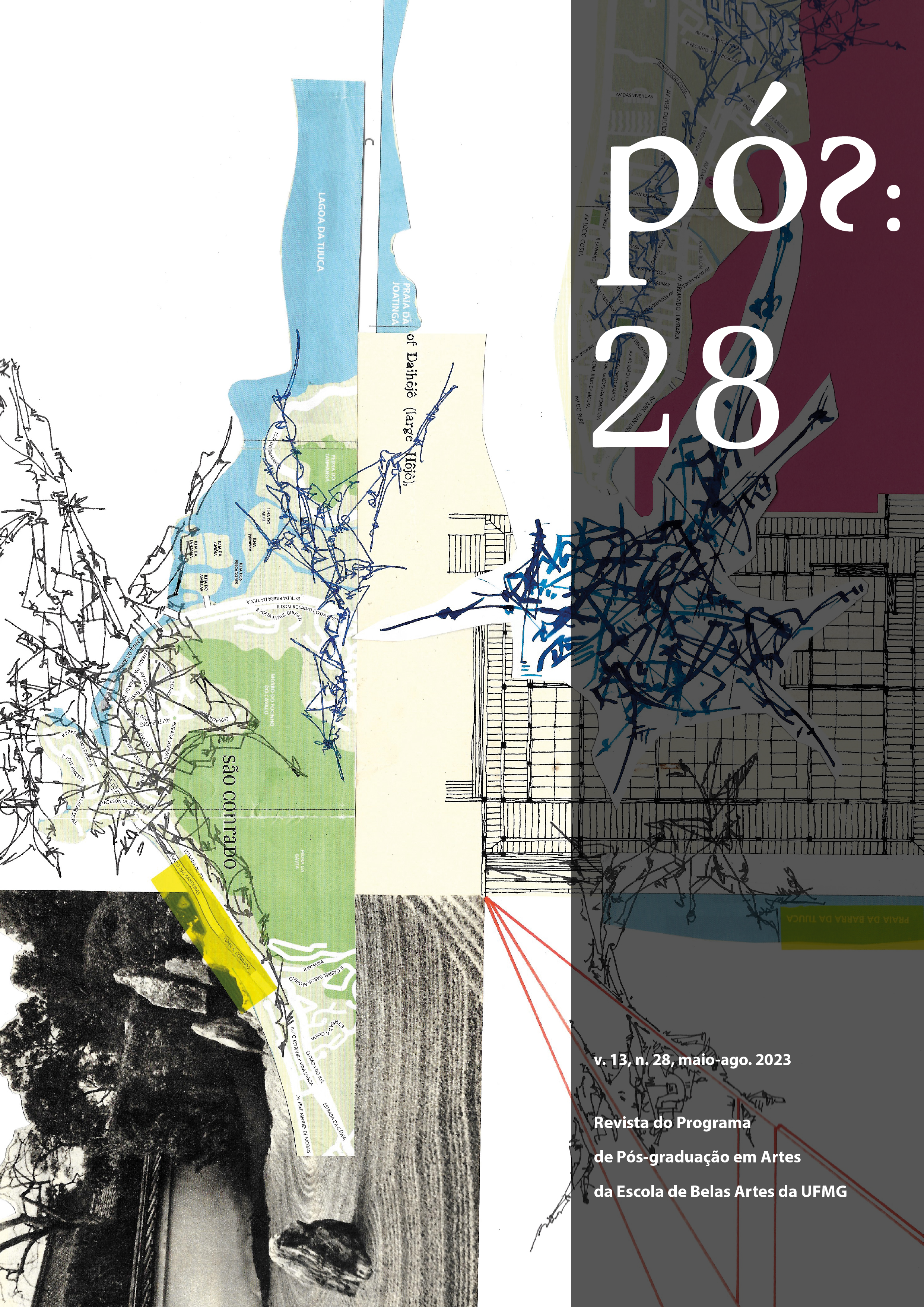
This paper attempts to demonstrate how the city can be symbolically seized as an Expanded Abode, from the experience of Derive and its unfoldings from the poetic creation. For this, historical, philosophical and psychological arguments are presented where the city is portrayed as a shelter symbol, using the poetic thought of Gaston
Bachelard on the Abode and the psychological analysis of James Hillman on the city. The situationist Derive is appropriate as a technique of poetic creation, capable of breaking with the capitalist ideal and making emerge in the subject other subjectivities related to the territory. If the home is the house endowed with three elements – memory, affection and identity –, the city, symbolically acquiring these elements, can be perceived as an Abode.
Downloads
References
BACHELARD, G. A filosofia do não; O novo espírito científico; A poética do espaço. Seleção de
textos e introdução de José Américo Motta Pessanha. Tradução de Joaquim José Moura Ramos et
al. São Paulo: Abril Cultural, 1978.
BACHELARD, G. A Poética do Espaço. São Paulo: Martins Fontes, 2008.
BALDAN, L. P. Lugares que habitam lugares. Arte & Ensaios, Rio de Janeiro, v. 21, n. 21, p. 42-51,
dez. 2010.
BARROS, J. M. Introdução. In: BARROS, J. M. Cultura e comunicação nas avenidas de contorno em
Belo Horizonte e La Plata. Belo Horizonte: PUC Minas, 2005. p. 1-8.
BARROS, J. M. Cidade, Modernidade e Contemporaneidade. In: BARROS, J. M. Cultura e
comunicação nas avenidas de contorno em Belo Horizonte e La Plata. Belo Horizonte: PUC
Minas, 2005. p. 8-54.
BARROS, J. M. Cidade de Imagens e Imagens da Cidade. In: BARROS, J. M. Cultura e comunicação
nas avenidas de contorno em Belo Horizonte e La Plata. Belo Horizonte: PUC Minas, 2005. p. 54-
BENJAMIN, W. Baudelaire e a modernidade. Tradução e edição de João Barrento. Belo Horizonte:
Autêntica, 2015.
BONDIA, J. L. Notas sobre a experiência e o saber da experiência. Revista Brasileira de Educação,
n. 19, p. 20-28, mar. 2002.
CARERI, F. Walkscapes: o caminhar como prática estética. Prefácio de Paola Berenstein Jacques.
Tradução de Frederico Bonaldo. São Paulo: Editora G. Gili, 2013.
CAVALCANTE, R. Thomas Hobbes e a Teoria do Contrato Social em analogia com o meio em
que se vive na Favela da Rocinha. Jusbrasil. 2017. Disponível em:
http://quelcavalcs.jusbrasil.com.br/artigos/454207833/thomas-hobbes-e-a-teoria-do-contratosocial-em-analogia-com-o-meio-em-que-se-vive-na-favela-da-rocinha. Acesso em: 5 jul. 2018.
CAVALCANTI, T. R. de A. Jung. 2. ed. São Paulo: Publifolha, 2009.
FERREIRA, B. R. Vejo ruínas por onde passo, crio paisagens quando me desloco. In: ENCONTRO DA
ANPAP, 25., 2016, Porto Alegre. Arte: seus espaços e/em nosso tempo. Porto Alegre: ANPAP, 2016. p.
–1440.
FLUSSER, V. Filosofia da Caixa Preta: ensaios para uma futura filosofia da fotografia. São Paulo:
Hucitec, 1985.
FREUD, S. O futuro de uma ilusão. Tradução de Renato Zwick. Porto Alegre: L&PM, 2011.
GALFETTI, G. G. Minha casa, meu paraíso. [s. l.]: Blau, 1999.
GOULART, F. Urbano ornamento: inventário de grades ornamentais em Belo Horizonte (e outras
belezas). Belo Horizonte: Urbano Ornamento, 2014.
HILLMAN, J. Cidade & Alma. Tradução de Gustavo Barcellos e Lúcia Rosenberg. São Paulo: Studio
Nobel, 1993.
JUNG, C. G. et al. El Hombre y sus Símbolos. Madrid: Aguilar, 1966.
JUNG, C. G. Psicologia do Inconsciente. 23. ed. Petrópolis: Vozes, 2013. (v. 7/1).
LATERZA, M. A Cidade como Morada-Expandida: Derivas por Belo Horizonte e Experiências
Estéticas em Gravura. 2018. 310 p. Dissertação (Mestrado em Artes) – Universidade do Estado de
Minas Gerais, Belo Horizonte, 2018.
LATERZA, M. Roteiro estético das minas enganosas. Belo Horizonte: Memória Gráfica Edições,
LE BRETON, D. “Ficar em silêncio e caminhar são hoje em dia duas formas de resistência política”.
Entrevista por Paulo Bujalance, Málaga, 19 de outubro de 2017. Artigo publicado originalmente no
Diario de Sevilla. Desenhares. 2017. Disponível em:
https://desenhares.wordpress.com/2017/10/21/ficar-em-silencio-e-caminhar-sao-hoje-em-diaduas-formas-de-resistencia-politica/. Acesso em: 27 jan. 2018.
LYNCH, K. A Imagem da Cidade. Tradução de Maria Cristina Tavares Afonso. 3. ed. [s. l.]: WMF
Martins Fontes, 2011.
MAGNANI, J. G. C. De perto e de dentro: notas para uma etnografia urbana. Revista brasileira de
Ciências Sociais, São Paulo, v. 17, n. 49, p. 11-29, jun. 2002.
PERRONE, M. P. M. S. B. A imaginação criadora: Jung e Bachelard. Associação Junguiana do Brasil
(AJB), Instituto de Psicologia da USP (IPUSP). Disponível em:
http://www.ip.usp.br/laboratorios/lapa/versaoportugues/2c30a.pdf. Acesso em: 27 jan. 2018.
PESSOA, F. Cancioneiro. [s. l.]: Ciberfil Literatura Digital, 2002.
SOLNIT, R. Wanderlust. [s. l.]: Penguin Books, 2000.
RANCIÈRE, J. O dissenso. In: NOVAES, Adauto (org.). A crise da razão. São Paulo: Companhia das
Letras; Brasília, DF: Ministério da Cultura; Rio de Janeiro: Fundação Nacional de Arte, 1996.
TIBERGHIEN, G. A. A cidade nómade. In: CARERI, F. Walkscapes: o caminhar como prática estética.
Prefácio de Paola Berenstein Jacques. Tradução de Frederico Bonaldo. São Paulo: Editora G. Gili,
p.17-22.
Downloads
Published
Issue
Section
License
Copyright (c) 2023 Mariana Fonseca Laterza

This work is licensed under a Creative Commons Attribution-NonCommercial 4.0 International License.
Authors who publish in this journal agree to the following terms:
- Authors retain copyright and grant the journal the right of first publication, with the work simultaneously licensed under the a Creative Commons Attribution-NonCommercial 4.0 International License that permits sharing of the work with acknowledgement of authorship and initial publication in this journal;
- Authors are permitted to enter into additional contracts separately, for non-exclusive distribution of the version of the work published in this journal (e.g., the Creative Commons Attribution License).
- Authors are permitted and encouraged to publish and distribute their work online (e.g., in institutional repositories or on their home page) at any point before or during the editorial process, as this may generate productive changes as well as increase the impact and citation of the published work.
- It is the responsibility of the authors to obtain written permission to use in their articles materials protected by copyright law. Revista PÓS is not responsible for copyright breaches made by its contributors.








 |
|