Vol. 13 No. 28 (2023): Maio-Ago: Arte pública e suas encruzilhadas
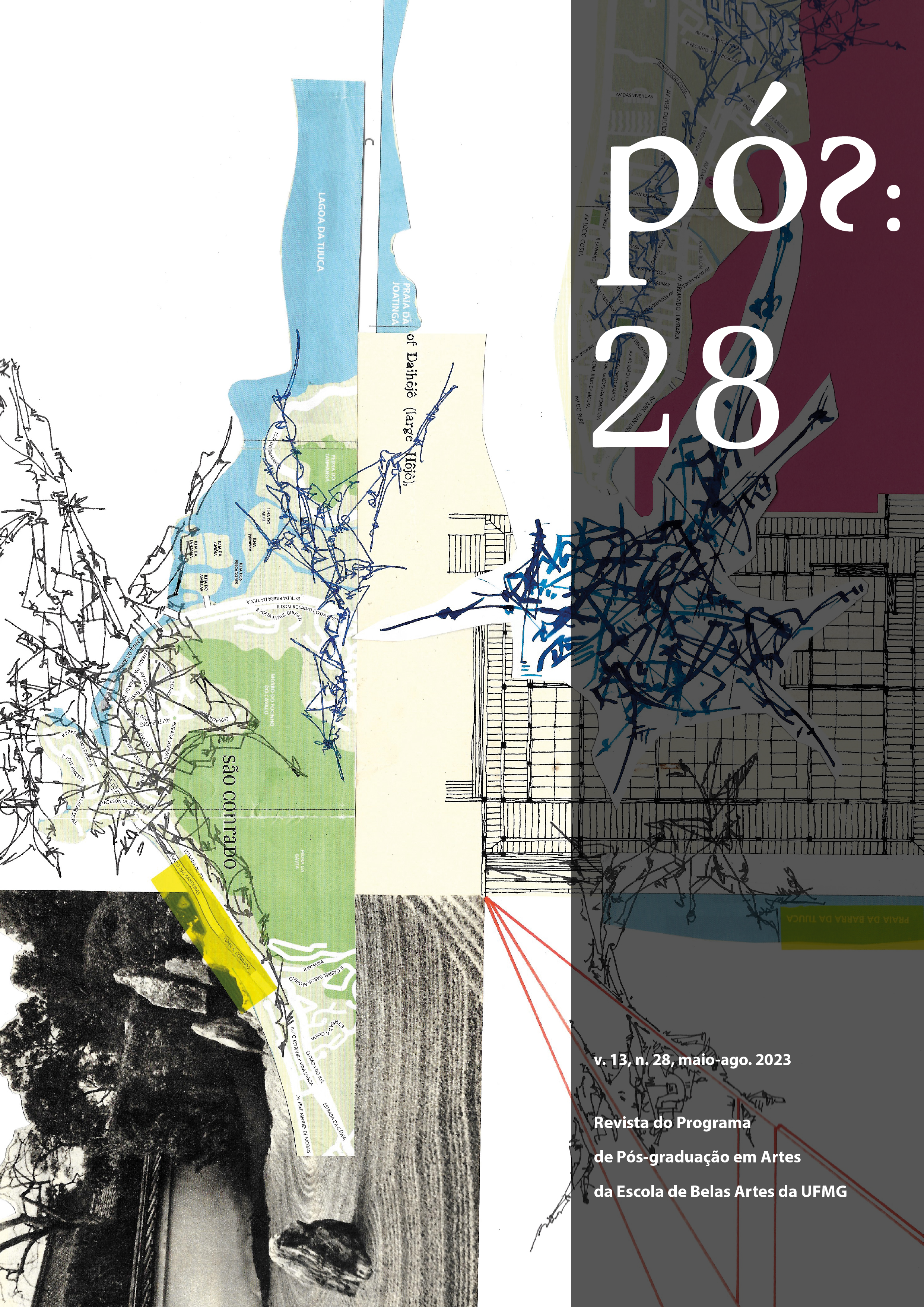
					View Vol. 13 No. 28 (2023): Maio-Ago: Arte pública e suas encruzilhadas
Published: 2023-08-01

Editorial

Traduce

  • From site to community in new genre public art the case of Culture in Action (Part I)

    Miwon Kwon; Rízzia Rocha, Anna Luiza Coli
    7-30
    DOI: https://doi.org/10.35699/2238-2046.2023.45740

Dossiê

  • Other “encruzas” for public art elements of amerindian and afrodiasporic cosmovisions in the weave between alternative temporalities, communities with multiplicities and different teachings

    Marcelo Simon Wasem
    31-58
    DOI: https://doi.org/10.35699/2238-2046.2023.46037
  • The common, the community (and its opposites)

    Daniel Filipe Carvalho
    59-74
    DOI: https://doi.org/10.35699/2238-2046.2023.45839
  • Horizontal and Collaborative Practices with Kaingang Indigenous Communities Art as a Ground to Carry Out Actions

    Kalinka Lorenci Mallmann, Andreia Machado Oliveira
    75-90
    DOI: https://doi.org/10.35699/2238-2046.2023.45499
  • Instances of urban artistic interventions in Sala de Estar and Casa Pública projects

    Mariana Gonçalves Paraizo Borges, Meriney dos Santos Horta
    91-116
    DOI: https://doi.org/10.35699/2238-2046.2023.45500
  • Invisible, visible The Representation of the Immaterial in the Works Questions and Popular Poetics by Abigail Reyes

    Libia Alejandra Castañeda Lopez
    117-136
    DOI: https://doi.org/10.35699/2238-2046.2023.45501
  • The Docilization of Public Art Post-Graffiti and Gentrification in Rio de Janeiro's Port Zone

    Luiz Sérgio de Oliveira
    137-159
    DOI: https://doi.org/10.35699/2238-2046.2023.45483
  • The City as an Expanded Home

    Mariana Fonseca Laterza
    160-187
    DOI: https://doi.org/10.35699/2238-2046.2023.45464
  • On Anti-Monuments and Feminist Collaboration, an Analysis of Glorieta de las Mujeres que Luchan

    Gabriela Traple Wieczorek
    188-214
    DOI: https://doi.org/10.35699/2238-2046.2023.45470

Entrevista

  • The Crossroads of Memory When Public Art Overthrows the Monuments of Military Dictatorships

    Alexandre de Albuquerque Mourão, Sara Vasconcelos Cruz
    212-232
    DOI: https://doi.org/10.35699/2238-2046.2023.45469

Articles - Open section

  • The Invisible as Visible Memory The Photographic Event and the Fabrication of the Real from Three Brazilian Photographers

    Bárbara Lissa, Maria Vaz, Carlos Falci, Bruni Emanuele Fernandes
    230-248
    DOI: https://doi.org/10.35699/2238-2046.2023.44839
  • Decolonial Gaze Black Theatre as a Main Point on the Agenda

    Elisa Belém
    249-269
    DOI: https://doi.org/10.35699/2238-2046.2023.45404
  • Daguerreotypes by Agnès Varda aesthetics and politics in the figurations of intimacy

    Fernanda Albuquerque de Almeida
    267-287
    DOI: https://doi.org/10.35699/2238-2046.2023.44758
  • Zimbo Trio in Film Musical Genres and Audiovisual Analysis

    Fábio Uchôa
    288-316
    DOI: https://doi.org/10.35699/2238-2046.2023.45511
  • When Time Becomes Space The Song as a “Time-Suppressing Machine”

    Alexandre Siqueira de Freitas
    317-342
    DOI: https://doi.org/10.35699/2238-2046.2023.45336
  • Appearences of Death in Kantor and Rimini Protokoll

    Bruno Leal Piva
    343-361
    DOI: https://doi.org/10.35699/2238-2046.2023.43925
  • “Craftsmen of the art of painting and gilding” teaching, learning and work relations in the Capitany of Minas Gerais – 18th century

    Luciana Braga Giovannini
    362-391
    DOI: https://doi.org/10.35699/2238-2046.2023.45197

Ensaio visual

  • Instaurando portais na Serra do Curral

    Augusto Henrique Lopes Costa, Ricardo Biriba
    392-396
    DOI: https://doi.org/10.35699/2238-2046.2023.45055
  • Visual poetics of the encounter while photographing the scenic performance of Neci

    Daniel Macêdo
    397-408
    DOI: https://doi.org/10.35699/2238-2046.2023.45300